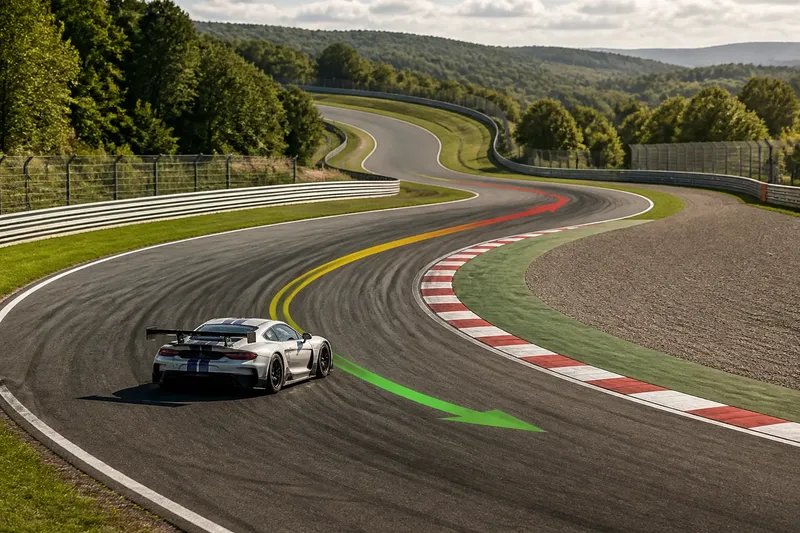
Street Circuit or Purpose-Built Track: What the Layout Changes
Street circuit or purpose-built track: understand how layout shapes race rhythm and spectator views, then choose an event that suits how you want to watch.
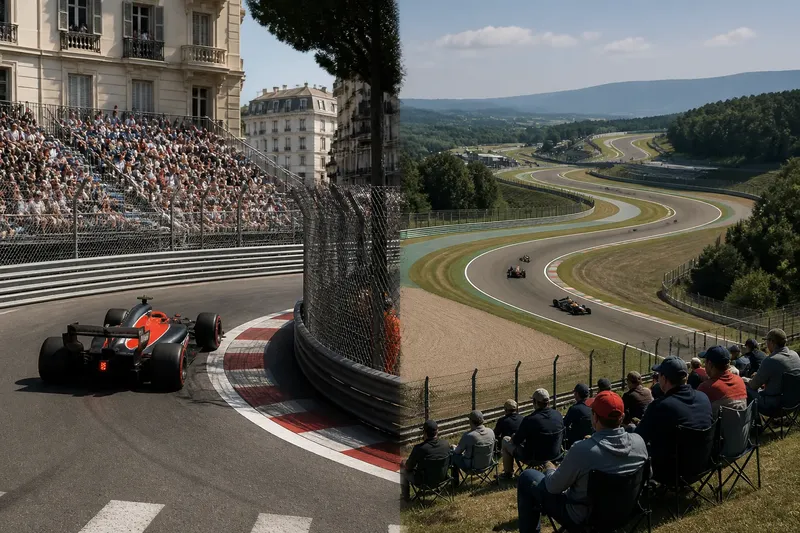
You can see a car brake for a street-circuit hairpin, but a barrier may hide where it goes next. At a purpose-built track, a hillside seat might show several bends at once, though the cars look smaller in the distance. Choosing a street circuit or purpose-built track is really a choice about the racing sequence and the view you want.
The circuit’s category offers a useful clue, not a verdict. Look at how its corners connect, where spectators can stand or sit, and what you hope to follow during a race.
What does a street circuit make you notice?
A temporary street circuit uses roads that ordinarily serve another purpose. Barriers, fencing and temporary facilities define the route, while buildings and the existing street grid constrain where it can turn. The result is often a tight, visually enclosed course, though each venue has its own layout.
That enclosure can make a corner feel close and immediate. A building or barrier may hide the approach, however, so a spectator might see the braking zone without seeing the next straight. A screen or a position with a wider view can help connect those separate moments.
Street layouts often ask drivers to manage sharp direction changes and corners bordered by barriers. A car may need to leave one bend in a position that sets up the next, even if that means giving up the most direct line out of the first. Small changes of position can be easy to spot at a particular corner, but that does not mean the whole lap is visible from there.
The sequence may create a stop-start rhythm of braking, turning and accelerating. That is a tendency, not a rule: a street route can have a fast section, just as a purpose-built circuit can pack in tight bends. Read the route itself rather than relying on the label.
What changes at a purpose-built track?
A purpose-built circuit is designed for racing rather than adapted from ordinary roads. Designers can shape straights, corners and surrounding space as parts of one venue, creating anything from linked bends that reward a smooth flow to slow turns separated by a long straight.
Open surroundings can make it easier to watch a car approach, turn and accelerate away. Elevation still affects what is visible: a crest can hide the track beyond it, while a slope may open a view across several corners.
A permanent venue does not make every seat a good viewpoint. Grandstands face particular sections, and terrain, fencing or buildings can obstruct the rest. The useful comparison is not simply between circuit types; it is between the sequence you want to watch and the view available from your seat.
Roomier corners may allow a car to carry speed through a longer sequence before a major braking zone, or a designer may place slow turns between faster sections. The circuit’s rhythm depends on how those parts connect, not on whether the road is temporary.
How should you compare circuit layouts and spectator views?
Start with the route, then consider what the spectator position lets you follow. A circuit map shows the order of corners and straights, while seating information, venue images and access maps add details about your view and the surrounding site.
- Check the corner sequence: If the map shows linked bends, choose a viewing area that covers more than one if you want to follow how a driver sets up the next turn; otherwise, favour a position focused on one corner.
- Check for obstructions: If venue images or seating details show fencing or buildings blocking the next section, look for a screen or choose a clearer vantage point; if the view is open, decide whether that broader perspective suits you.
- Check the available viewing areas: If one position shows a braking zone and another shows a longer stretch, choose based on whether you want to watch a single manoeuvre or the build-up to it; if neither view suits, consider another venue.
- Check the walking routes: If the access map shows a long or awkward route between the entrance, seat and facilities you plan to use, weigh that against the view; if the route is straightforward, the position may be easier to manage during the day.
- Check screens and current event arrangements: If a screen covers action outside your sightline or temporary seating is clearly described, use that information when comparing positions; if details are missing, check the organiser’s current guidance before deciding.
- Check transport and entrances: If the travel advice points to a convenient entrance near your chosen area, factor it into your plan; if it does not, compare another entrance or viewing section rather than assuming the circuit’s general layout tells you how to get there.
Not worth the effort: trying to predict every passing opportunity from the outline of the track. A map can show the order of the corners, but it cannot tell you exactly how drivers will use them on race day.
Which layout suits the race you want to watch?
Imagine you are choosing between two events. For this invented situation, assume one has a city-centre hairpin with a grandstand facing the braking zone; the other has a hillside seat overlooking linked bends, but the cars appear farther away. First, decide whether close detail at one corner matters more than seeing a sequence. Next, check whether the hairpin view includes a screen showing the rest of the lap, and whether the hillside position has an unobstructed view across the bends. If you want to watch braking and turn-in up close, the city-centre seat fits; if you want to follow how one bend feeds into another, choose the hillside seat. The trade-off is a more immediate view at the hairpin versus a broader view of the sequence.
For a day with children or occasional spectators, favour a position where the action is easy to follow from one place. For a first visit, check walking routes, entrances, transport advice and access information as well as the seat itself. A dramatic corner is less useful if you cannot see where the cars go next or comfortably reach the viewing area.
What questions help you choose a street circuit or purpose-built track?
Does a street circuit always have slower corners?
No. Street routes often include tight turns, but a particular circuit may also have a faster section. Check the map to see how its actual sequence is arranged.
Is every purpose-built circuit easy to see from the stands?
No. A grandstand may cover only one part of the route, and terrain or fencing can block other sections. Check the seating information and venue images for the view from the position you are considering.
What should I use alongside a circuit map?
Use the seating plan, access map, venue images and current organiser guidance. Together, these can show the view, possible obstructions and practical routes around the venue.
Which circuit type is better for a first visit?
Neither type is automatically easier. Choose a seat with a clear view of a section you want to follow, then check how straightforward it is to reach and whether a screen helps cover the rest of the race.
When weighing up a street circuit or purpose-built track, match the seat to the part of racing you most want to understand. A close hairpin can make braking and turn-in vivid; a broad view of linked bends can show how one decision shapes the next. The circuit map matters, but the view from the actual spectator position is what turns that shape into a race you can follow.